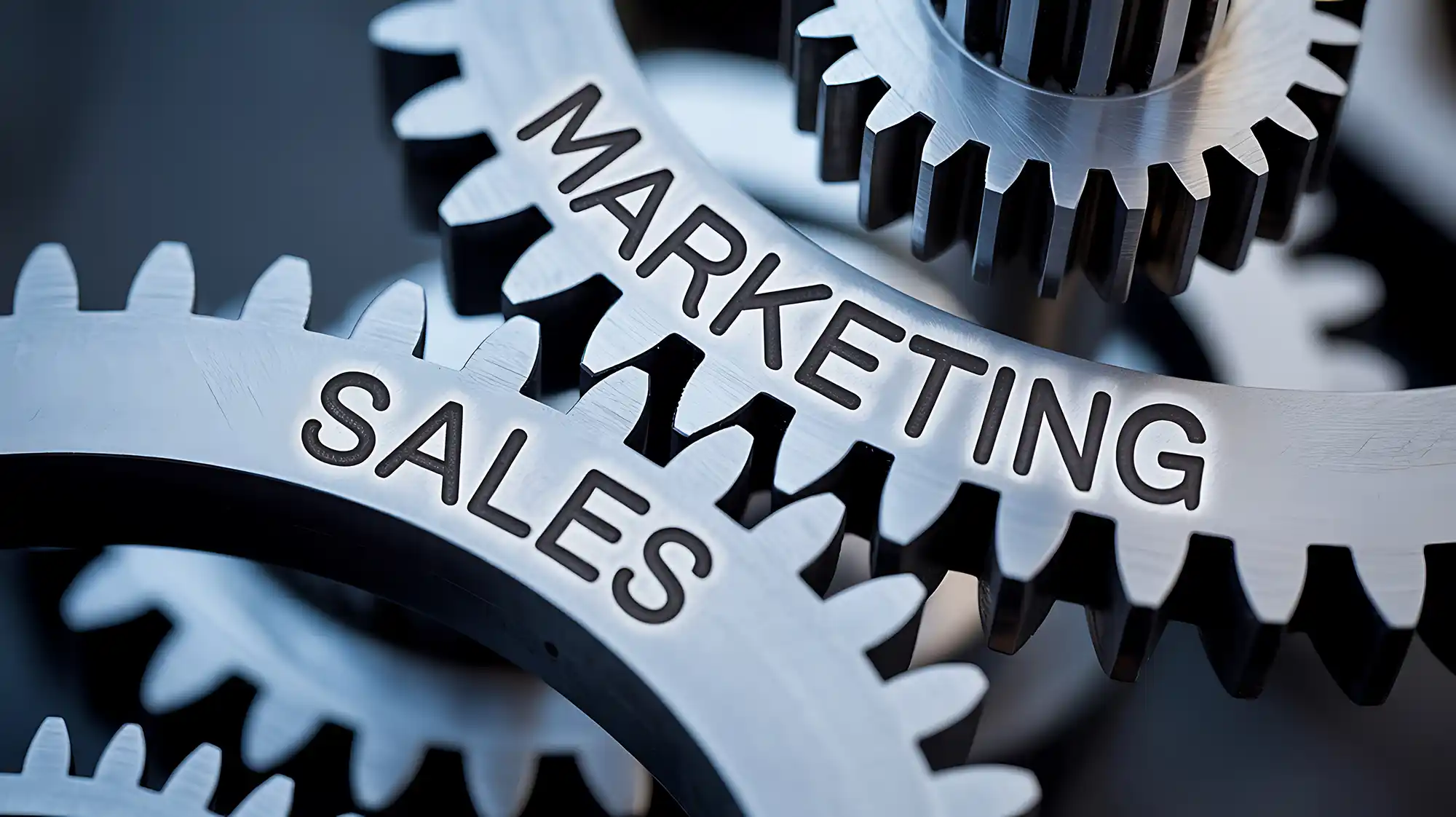
Sales or Marketing are they separate and must I do both? An interesting question and probably best explained by a boardroom comment that I often hear “We don't need any more marketing spend, what we need is more sales”. The simple truth in almost every business is that sales closes demand and marketing creates it. Without sales, your revenue slows but without marketing nobody knows you exist. A conundrum? Not really, but what is critical is that you get the balance right between investing in marketing and maximising profitable sales. That’s the nirvana we all chase. Let’s look at how we can get there and balance out our sales and marketing strategy.
At any point in time it’s estimated that around 95% of buyers are not actively looking at buying what you offer at that very moment. Pretty obvious really! Yet many entrepreneurs believe marketing's job is generating leads immediately, right now, almost a cold call! Probably not helped by the digital generation and its ability to give instant tracking. But lets slow it all down a bit, if your marketing only targets people ready to buy now, you are ignoring your future buyers. Once you have the awareness levels up you can send in your sales team to close the sale. This is a much better strategy than a cold call, which has to do both of these things at the same time. Instant sales are fine but they don’t tend to give long term results. So here is the first of my rules in marketing v sales. The businesses that are most successful are the ones investing and building brand awareness and marketing to their target markets in the medium to long term. They are then able to complete the sale much more easily.
Many owners, entrepreneurs and senior managers don’t acknowledge that marketing can determine whether a company grows, stagnates or disappears. Marketing investment identifies markets, understands customers buying behaviours, shapes product development, builds competitive advantage, creates demand/future revenue and awareness and probably most importantly establishes trust. But it’s only when a sale is made that revenue is possible. So, marketing needs sales to create a return. A business needs both working in harmony if it is to maximise its returns.
One of the biggest flaws in business folklore is that good products sell themselves. This is true in part, but it won’t maximise success. History is full of brilliant products that never exploited their true potential whilst brands that invested in marketing and capitalised on sales became household names. In fact, average products with superior marketing and strong sales have become category leaders. So here is another sales and marketing truism. Customers don't necessarily buy the best product, they buy the product they know, trust and remember and the one that’s in front of them! Nobody buys an Apple device because it's the cheapest on the shelf. They buy into a brand that makes technology accessible and easy. A brand that offers simplicity, status and design. And one they are aware of and that’s available to them across all the distribution channels thanks to Apple’s sales team!
Your own offer awareness is central to your business success. If customers don't know you exist or what it is you offer, they can't buy from you. The brand or supplier that comes to mind first usually gets the sale, this top-of-mind awareness is one of the strongest drivers of growth across both B2C and B2B markets. And it’s built up over time using a number of communication channels. Often a joint effort from your marketing and sales efforts. How many orders are won because the sales prospect had already heard of the company? How many sales conversations start because a customer knew about the offer before speaking to a salesperson? How many opportunities are missed because the market has never heard of the business or what it actually offers? Marketing's biggest contribution occurs before the first sales call. It’s the investment you put into your marketing budget that’s aimed at your customers! If you think marketing is too expensive for you, keep running a business that few have heard of and you won’t be arguing about cost, you will be discussing your lack of sales revenue.
The easiest way to cut marketing spend is to stop doing some of the marketing you need to carry out. The second easiest way is to go bust through lack of profitable sales. Marketing doesn't just generate demand. It improves profitability. For example people will pay more for trust, which is something that marketing and sales service together can deliver. A strong marketing and sales strategy reduces risk. In turn a strong marketing and sales strategy creates strong demand and this creates more stable cash flows. Stable cash flows reduce business risk. So marketing isn't simply a growth function. It's a risk management function too.
Some of the most valuable assets a company owns never appear on their balance sheet. But marketing and sales create awareness, trust, reputation and demand which can all add to profitable performance. Business owners and boards care about growth, profitability and cash flow. Marketing and sales when combined can help deliver these, which is why it can’t be left to marketing or sales alone to ensure business success!
What happens if you remove or worse still don’t already do any marketing for your business. You can pretty much say goodbye to pre-sales awareness, positioning, differentiation, customer insight and demand-pull sales generation. In such a situation your sales pipeline shrinks or doesn’t exist at all, competitors fill the vacuum due to their marketing spend and you seem to be dying a slow death. That’s because customers easily forget you exist or replace you with new to them competitors. This all means you're sales team are left struggling, with falling sales rates and often non profitable deals. Sales may appear to bring in the business but it’s marketing that creates a queue of prospects and makes sure people are looking for you now and in the future.
So what is the answer to those initial questions posed and Sales or Marketing – which came (or comes) first? For me both functions are equally important and offer major business advantage. When linked they are powerful deciders when it comes to business success. As an MD, CEO or business owner if you get this mix right then it will go a long way to ensuring success now and in the future.
The author of this article is one of our team of business consultants who we use with our clients when appropriate. We add their abilities to our core financial and accountancy skills to give you a one stop service that meets all your business needs. If you would like to know more about how we can help you meet your business challenges then get in touch for a free consultation by email info@kaizengroup.uk or phone 01482 772261








-2-poster-00001.jpg)


.svg)